Blog
How Martial Arts in Rexburg Empowers Women With Real Self-Defense Skills
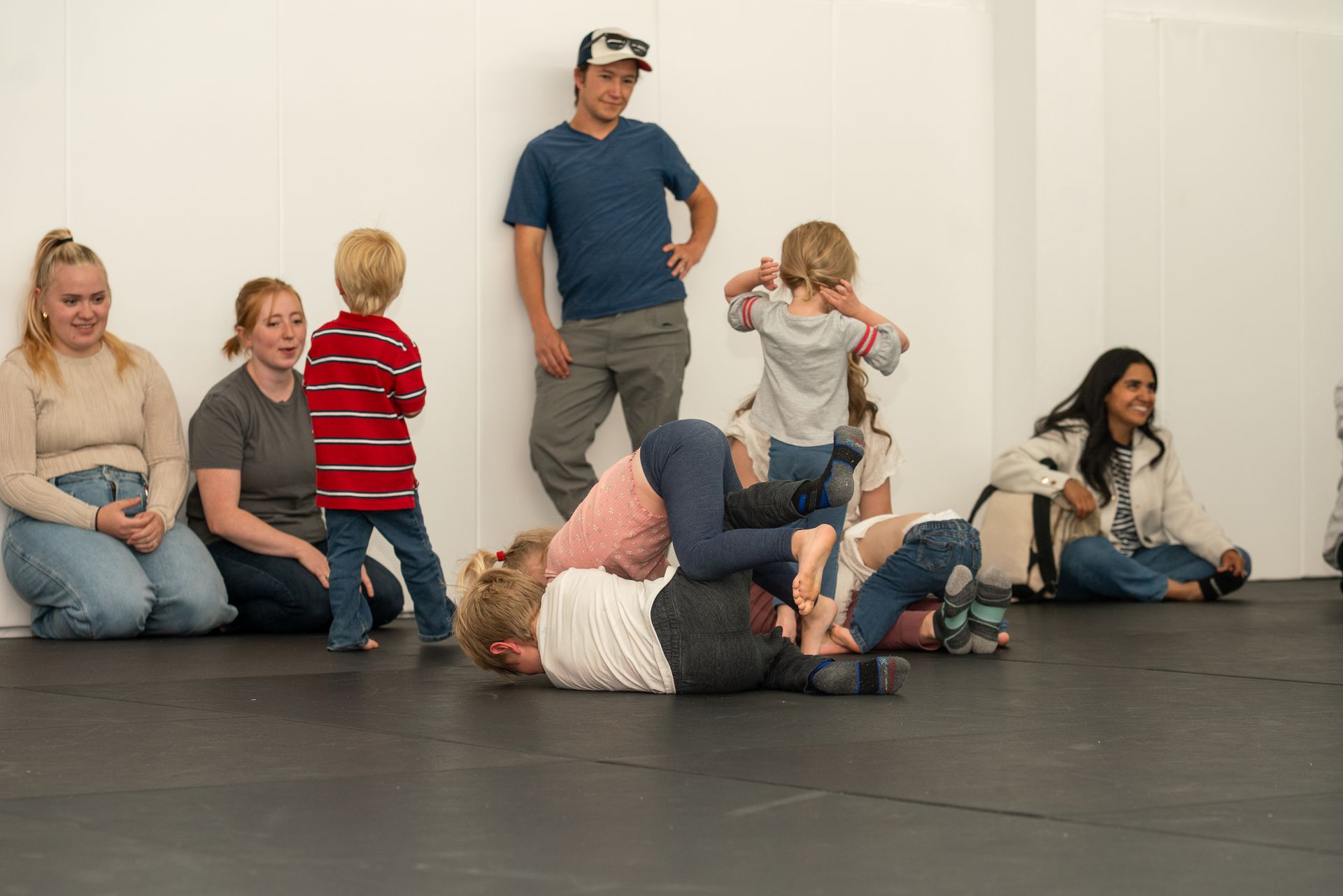
Martial Arts can turn uncertainty into calm, repeatable actions you can actually trust under pressure.
When women start training with us, the goal is usually simple: feel safer in everyday life. Not “become a fighter,” not “win a trophy,” just build real skills for real situations. Martial Arts works for that because it teaches more than technique. It trains your decision-making, your boundaries, and your ability to stay steady when something feels wrong.
In Rexburg, we meet a lot of women who are busy, practical, and not looking for drama. You want training that respects your time, doesn’t throw you into the deep end, and doesn’t pretend confidence magically appears. Our classes are built to be progressive and supportive, so you can learn step by step, pressure-test what you learn, and walk out feeling a little more capable than when you walked in.
This article breaks down how martial arts in Rexburg becomes functional self-defense, why grappling matters for women, and what you can expect when you train with us consistently.
Why “Real” Self-Defense Training Looks Different Than Most People Expect
A lot of self-defense advice sounds good until you picture it in real life. Real self-defense is messy: awkward distance, surprise, adrenaline, and the uncomfortable truth that the ground is a common place to end up. That’s why we train with resistance and progressive intensity, not just cooperative drills that only work when the other person “lets” them.
We also treat self-defense as a full system, not a single move. It includes awareness, posture, voice, boundaries, and the ability to protect yourself if someone closes distance anyway. Martial Arts gives you a framework to practice all of that in a controlled environment, then gradually apply it with a partner who is actively trying to stop you.
Most importantly, “real” self-defense is personal. Your height, strength, fitness level, and comfort with contact all matter. Our job is to help you build skills that work for you, not a one-size-fits-all script.
The Advantage of Grappling for Women: Control Beats Chaos
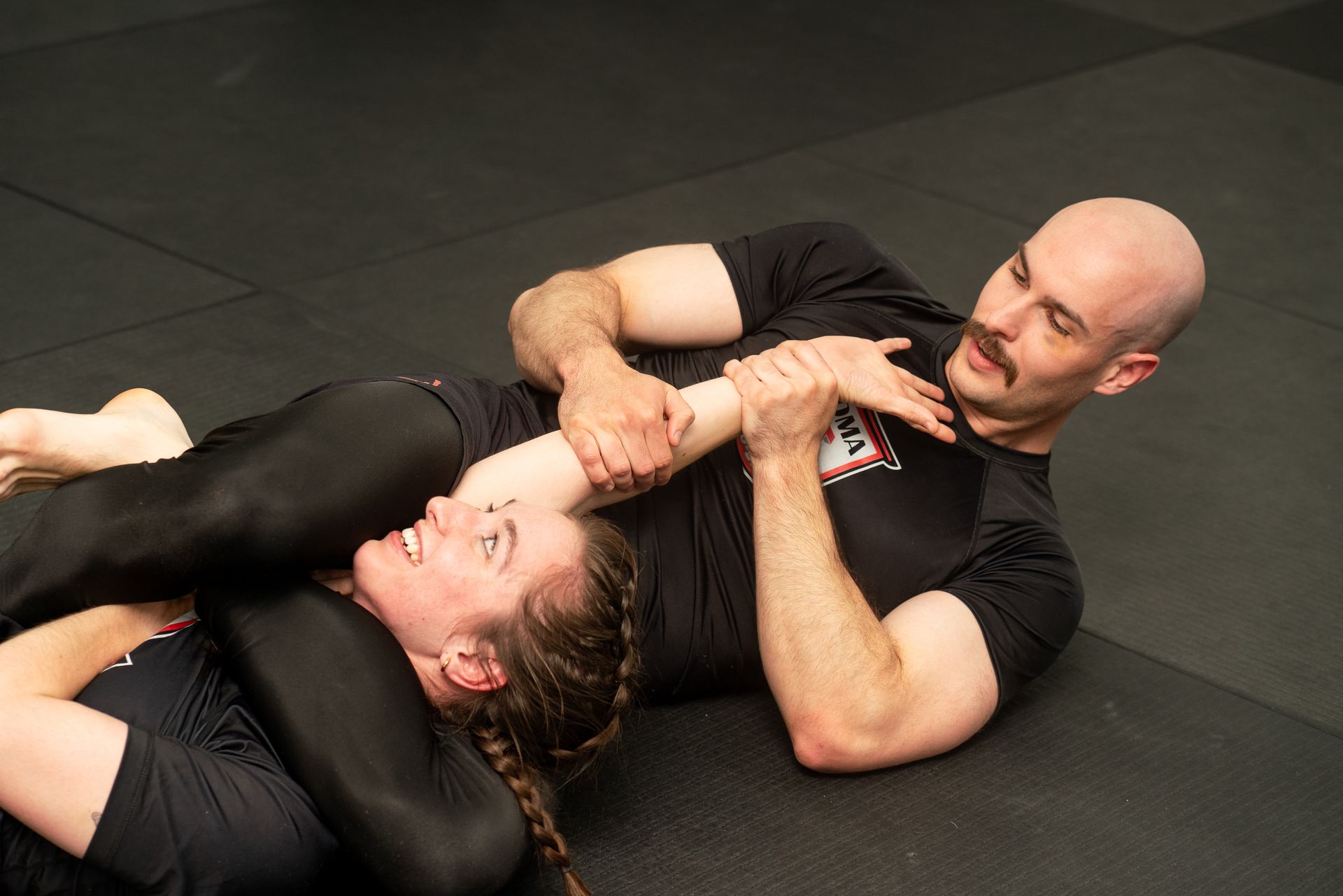
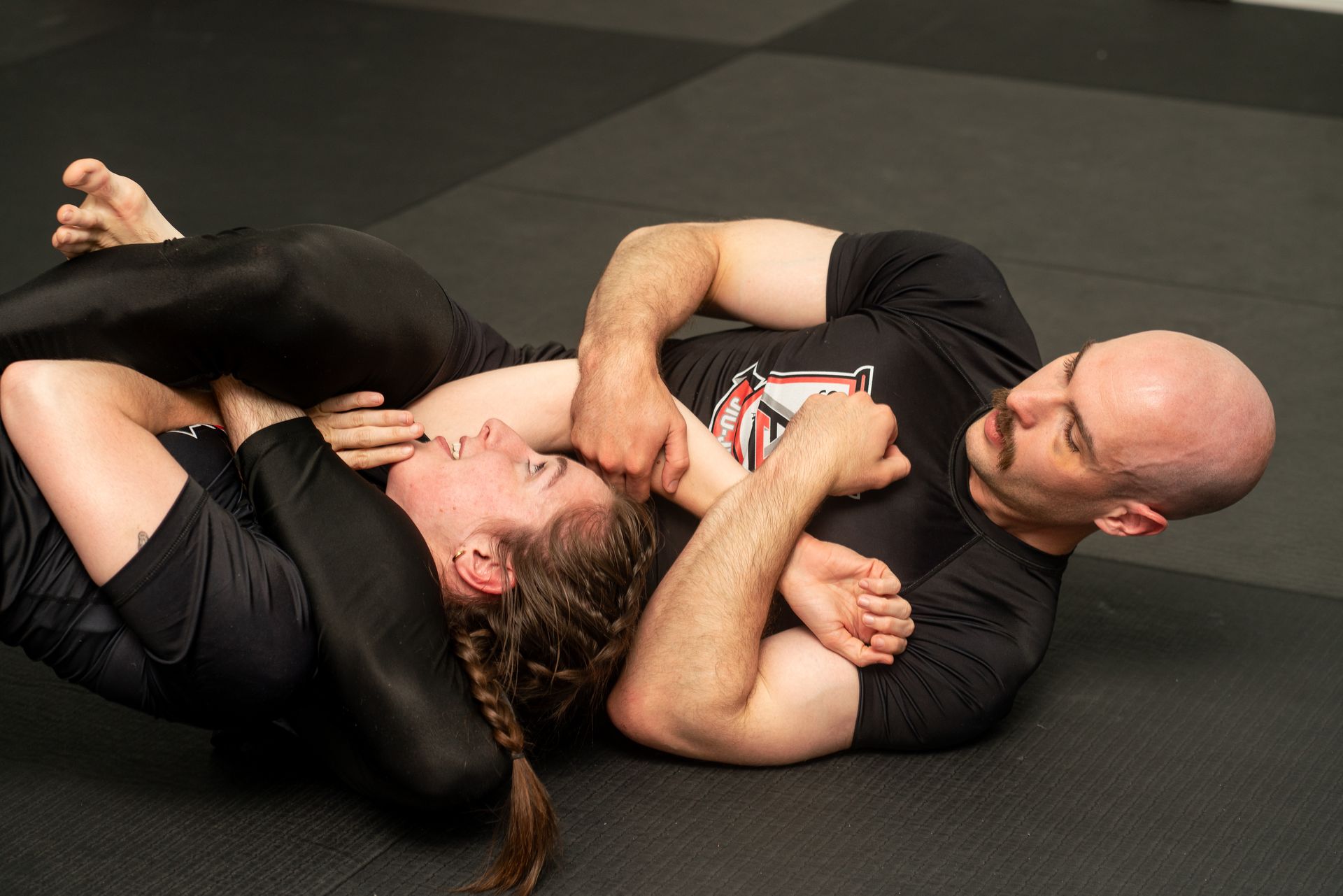
Many women worry that self-defense means trading punches with someone bigger. We don’t love that plan either. Grappling-based Martial Arts focuses on control, leverage, and positioning, which matters when strength and size are not in your favor.
Instead of trying to overpower, you learn how to:
- Stay balanced while someone tries to pull or push you off-center
- Create space to breathe and move when someone crowds you
- Break grips and manage wrists, sleeves, or hands
- Use hips and angles to reverse bad positions
- Escape from underneath and stand back up safely
You also get something underrated: the ability to remain functional while tired. In a stressful situation, your body burns energy fast. Training builds familiarity with that feeling so panic has less room to grow.
Martial Arts in Rexburg Idaho: Skills That Fit Real Life Here
Rexburg has its own rhythm. People walk between buildings, park at night, run errands alone, and live busy schedules. You don’t need to be paranoid to want practical habits that reduce risk. We teach self-defense in a way that fits normal routines, not extreme scenarios.
That includes simple, repeatable behaviors: where you place your attention in a parking lot, how you manage distance in a conversation that feels “off,” and how to choose exits in public spaces. Then we connect those habits to physical skills so the mental side and the technical side support each other.
When you train consistently, you start noticing how often you can avoid trouble early. That’s not fear. That’s awareness, and it’s empowering.
What You’ll Learn in Our Women-Friendly Training Environment
We keep our instruction structured and easy to follow, especially for beginners. You won’t be expected to “already know” anything. We explain the why behind techniques, because understanding creates faster progress and fewer injuries.
Here are core self-defense skills we build through our Martial Arts classes:
- Base and posture so you’re harder to push, pull, or fold
- Clinch awareness so you can address grabs and body contact quickly
- Escapes from common pins and holds, practiced repeatedly
- Guard fundamentals to protect yourself and create a path to get up
- Stand-up and get-away habits so you don’t stay tangled longer than necessary
- Calm breathing and pacing so adrenaline doesn’t hijack your choices
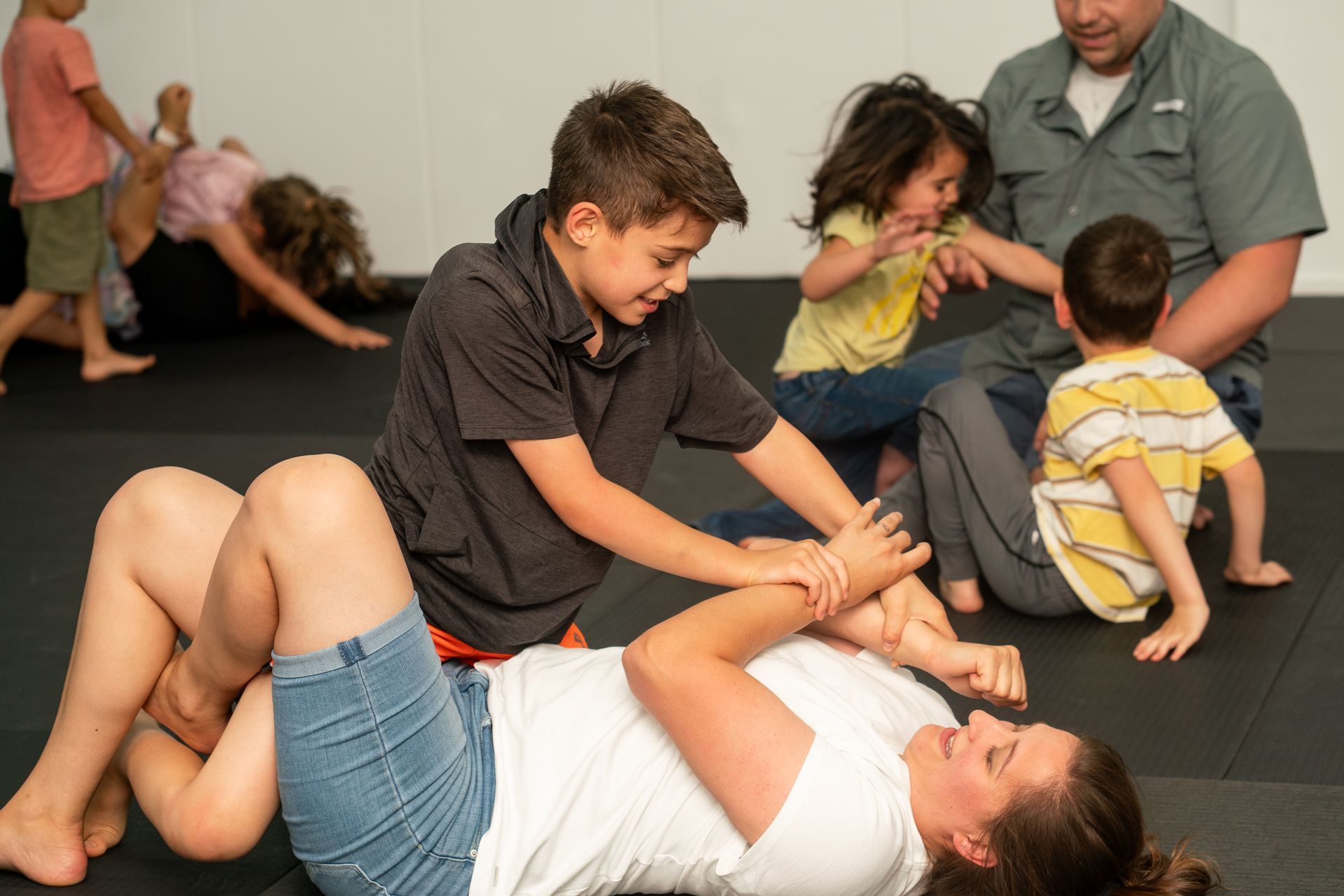
You’ll also learn how to train safely with partners of different sizes. That’s a big deal. Good training partners help you grow without turning every round into a struggle session.
How Confidence Actually Gets Built (It’s Not a Pep Talk)
Confidence is often described like a mindset shift. In training, it’s more concrete than that. Confidence comes from evidence. You practice a skill, you test it with increasing resistance, and you watch yourself succeed more often over time.
That’s why we use progressive training. First you learn mechanics. Then you add timing. Then you add pressure. Eventually you can apply techniques when you’re tired, when someone is resisting, and when you don’t get the “perfect” setup.
A quiet change happens along the way: you stop needing everything to feel comfortable before you act. You learn you can act while uncomfortable. That translates outside the gym in a way people don’t always expect.
A Beginner’s Path: What Your First Few Months Can Look Like
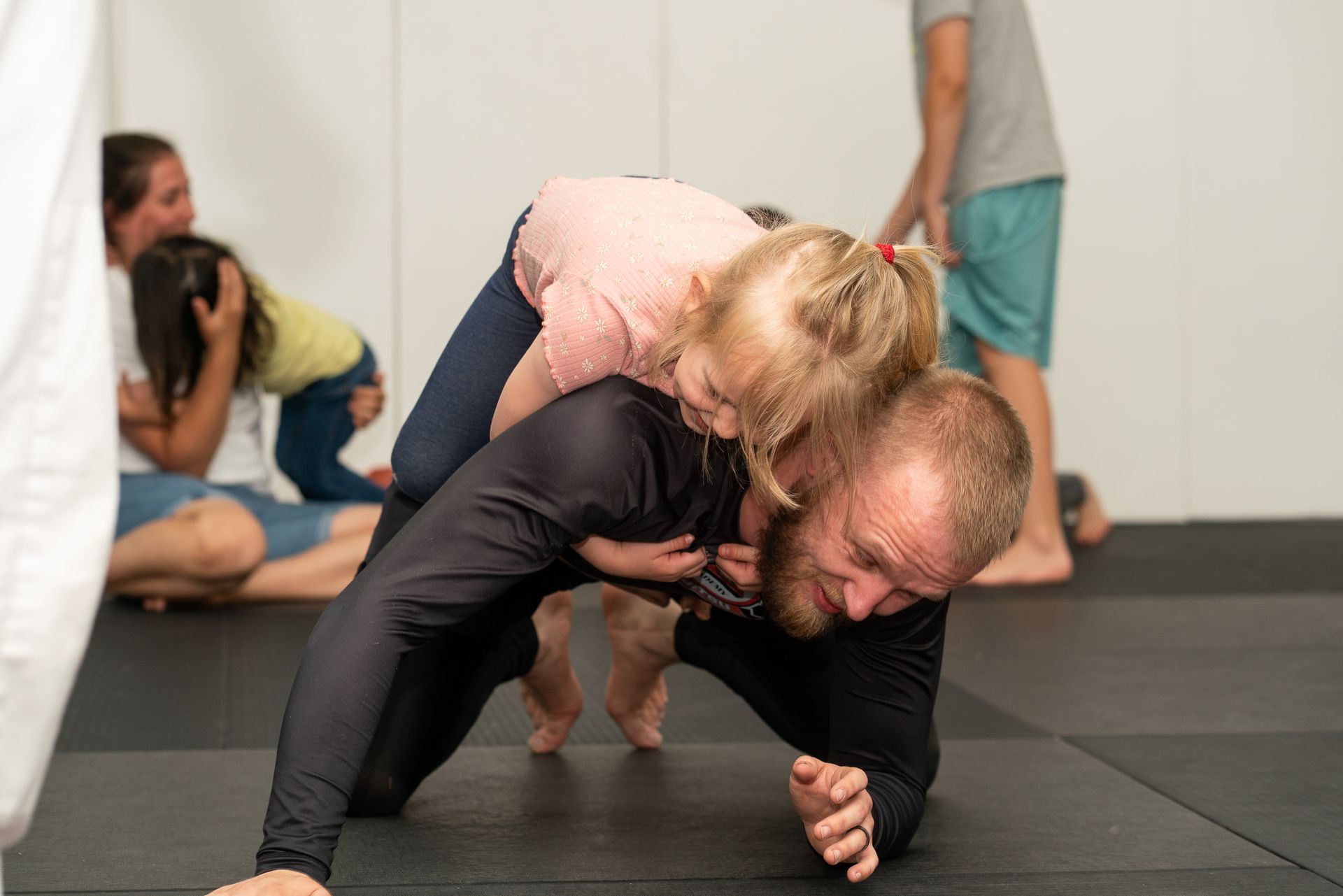
Starting Martial Arts can feel intimidating, especially if you’ve never done contact sports. We keep the ramp-up realistic. You’ll sweat, you’ll make mistakes, and you’ll probably laugh at least once when your body does something it didn’t mean to do. That’s normal.
A common progression looks like this:
1. You learn positions and basic movement, like how to bridge, shrimp, and stand safely.
2. You start connecting techniques: escape to a guard, guard to a sweep, sweep to top control.
3. You begin light sparring with clear boundaries and coaching, so you can apply skills without panic.
4. You build conditioning naturally through practice, not by being punished with workouts.
5. You refine details that make techniques work on different body types and against different levels.
The key is consistency. Once or twice a week, done steadily, beats occasional bursts of motivation.
Training With Partners: Safety, Boundaries, and Support Matter
Women often ask us if training partners will respect their space. The answer is that we set the culture intentionally. Safety and respect are non-negotiable, and our instructors guide the room so you’re not left to “figure it out” alone.
You can always communicate boundaries: pace, intensity, and preferred training partners when you’re new. We want you to feel challenged, not overwhelmed. There’s a big difference.
Martial Arts training should feel like learning a skill, not surviving an experience. When you feel safe enough to practice, your progress accelerates.
Self-Defense Is More Than Techniques: Awareness, Voice, and Choices
Physical techniques matter, but self-defense starts earlier than contact. We coach practical habits that stack the odds in your favor. Not because the world is dangerous all the time, but because you deserve options.
We spend time on:
- Distance management: how close is too close, and how to move without freezing
- Verbal boundaries: direct phrases that are clear and firm
- Environmental awareness: exits, lighting, and where your attention goes
- Decision-making under stress: choosing “leave now” before you negotiate internally
When you combine these with Martial Arts training, you get a complete toolkit. You’re not relying on luck or hoping someone else steps in.
Fitness Benefits That Support Self-Defense (Without Becoming the Whole Point)
It’s hard to talk about self-defense without mentioning fitness, because your body is part of the system. Training improves grip strength, core stability, hip mobility, and endurance. Those aren’t just “gym metrics.” They directly affect whether you can hold posture, escape pressure, and keep moving when you’re tired.
Many women also appreciate that the training is mentally engaging. You’re solving problems with your body. You’re learning timing and leverage. It’s not just reps and counting.
Over time, you’ll likely notice better posture, better energy, and a stronger sense of physical ownership. That last one is hard to describe, but you feel it when you feel it.
Martial Arts in Rexburg: What to Bring, How to Prepare, and What to Expect
If you’re considering martial arts in Rexburg Idaho, here’s what helps your first classes go smoothly. Wear comfortable athletic clothing, bring water, and arrive with a learner’s mindset. You don’t need to be in perfect shape to start. Training is how you get in shape.
Expect a structured class with instruction, drilling, and (when you’re ready) controlled sparring. Expect to be coached. Expect to repeat fundamentals a lot. Repetition is the point, because under stress you fall back on what you’ve practiced most.
And yes, you’ll probably be a little sore at first. The good kind of sore, the “I used my body” kind.
Take the Next Step
Building real self-defense skill takes more than watching tips online. It takes practice, feedback, and a training room where you can learn at your pace while still being challenged. That’s exactly what we focus on every day, and it’s why so many women choose to train with us long-term.
If you’re looking for martial arts in Rexburg that prioritizes practical skill, supportive coaching, and a clear path from beginner to confident training partner, we’d love to help you get started at Soma Jiu-Jitsu Academy.
If you are exploring martial arts training, join a free martial arts trial class at Soma Jiu-Jitsu Academy and learn from the ground up.
ACCESS OUR SCHEDULE
& EXCLUSIVE WEB SPECIAL
Secure your spot and get started today with our EXCLUSIVE offer!