Blog
Is Martial Arts the Secret to Better Sleep? Surprising Health Insights
The right kind of training can make bedtime feel less like a battle and more like a reset.
Sleep is supposed to be simple: you get tired, you fall asleep, you wake up refreshed. In real life, plenty of us in Rexburg know it is not that clean, especially during busy school semesters, stressful work stretches, and long winter weeks when daylight feels a little scarce. One of the most overlooked tools for better rest is not another app or supplement. It is martial arts training done consistently and intelligently.
We see it all the time: you come in wanting to get in shape, learn skills, or find a productive outlet, and then you mention a few weeks later that you are falling asleep faster. You are not waking up as much. Your mind is quieter at night. That is not a coincidence. Research on martial arts points to real sleep improvements, and our day-to-day experience in class lines up with it.
In this article, we will break down what the science suggests, why grappling-focused training can be especially effective, and how you can use martial arts in Rexburg as a practical way to support deeper, more consistent sleep.
Why training changes sleep more than most people expect
When you train, you are not just burning calories. You are asking your nervous system to work, recover, and adapt. That matters for sleep because good sleep is not simply “passing out.” It is a coordinated process of hormone signaling, temperature changes, brain-wave patterns, and stress regulation.
Clinical findings on youth practicing martial arts show meaningful differences in sleep: about 25 percent shorter sleep latency (time it takes to fall asleep), around 20 percent less nighttime waking, and roughly 5 percent higher sleep efficiency. Those are not tiny changes you would never notice. Those are the kinds of changes that make you wake up and think, “Oh. That felt different.”
For older adults, Tai Chi has been associated with better subjective sleep quality and changes to sleep structure such as more total sleep time, more non-REM stage 2 sleep, and less daytime drowsiness. We are not teaching Tai Chi, but the broader takeaway matters: martial arts can combine movement, breath control, and focused attention, which is a strong recipe for downshifting at night.
The sleep architecture piece: deep sleep, REM, and recovery
Sleep quality is partly about sleep architecture, meaning how your night cycles through stages. Two stages matter a lot for how you feel the next day:
Deep non-REM sleep for physical restoration
Deep non-REM is where a big chunk of physical repair happens. Training encourages your body to use that stage well because it has a clear reason to recover: muscles, connective tissue, and the nervous system need restoration. When you train with the right intensity, you often feel that pleasant “earned tiredness” later, not the jittery kind.
REM sleep for learning and emotional processing
Martial arts are skill-heavy. You are solving problems under pressure, adjusting to timing, and learning how to stay calm while your heart rate climbs. REM sleep is strongly tied to memory consolidation and emotional regulation. That is part of why sleeping well makes you sharper on the mats, and why training can make your brain more ready to sleep.
We also see a practical loop: when you sleep better, you show up with better reaction time and stamina; when you train well (without overdoing it), you sleep better again.
Hormones and stress: the quiet reasons martial arts helps insomnia
Sleep struggles are often stress struggles in disguise. Even if your day looks normal, your body can be carrying tension like it is bracing for something.
Martial arts training can support sleep through a few mechanisms researchers frequently point to:
• Lower cortisol over time through consistent stress exposure and recovery, especially when training includes controlled sparring and calm instruction
• Better melatonin signaling and circadian rhythm support through regular physical activity and predictable routines
• Reduced physical restlessness because you are meeting your body’s need for exertion, not just sitting in fatigue
In plain terms: training gives your stress a place to go. You learn how to breathe while you work. You learn how to stay present when you are uncomfortable. That carries into bedtime. Your brain has practiced “downshifting,” not just thinking about it.
Why grappling feels different than typical workouts
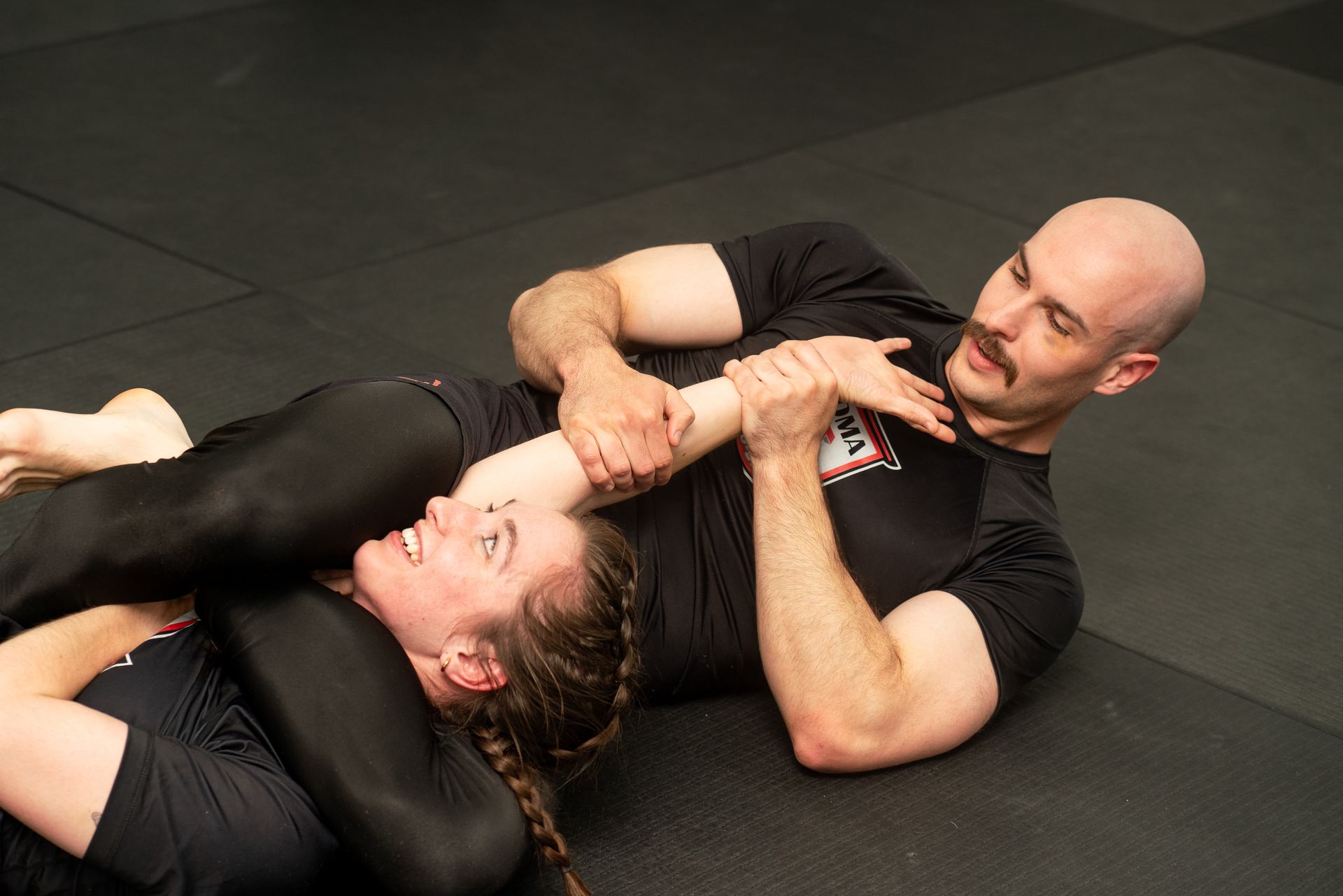
Most exercise can help sleep, but grappling has a specific flavor. It is full-body, close-range, and mentally demanding in short bursts. You are coordinating your hips, hands, and posture while reading another person’s balance and intention. That combination tends to create a deep kind of fatigue, not just sore legs.
A common pattern we notice is that new students leave class feeling alert for a short window (adrenaline happens), and then later the body settles hard. The nervous system had a clear “on” period and then a clear “off” period. That contrast often helps with sleep onset.
There is also something subtly helpful about training with other people. Social connection, community, and accountability sound like soft benefits, but they matter. Feeling supported and consistent in a routine can take the edge off the mental spinning that keeps you awake.
Martial arts in Rexburg: why sleep is a local issue, not just a personal one
Rexburg is active, but it is also seasonal. When winter hits, outside movement can drop, sunlight exposure changes, and schedules can get weird. Students juggle exams and late nights. Parents juggle early mornings and unpredictable kid sleep. Workers juggle shift patterns and stress. All of that shows up at bedtime.
That is where martial arts in Rexburg can be more than a hobby. It can be a structure. When you train two or three evenings a week at consistent times, your body starts anticipating work and recovery. You get a rhythm that your nervous system can trust, and that predictability is sleep-friendly.
We are also careful about how we coach intensity. More is not always better for sleep. Overtraining can backfire by keeping your stress hormones elevated, especially if you are training very late and then trying to crash immediately.
How many classes per week actually improves sleep?
Most people do best with a sustainable baseline. If your goal is sleep improvement, you do not need to train like a professional fighter. You need consistency, moderate effort, and a schedule that respects bedtime.
Here is a simple ramp-up we often recommend for adults:
1. Start with 2 classes per week for the first month to let your body adapt without feeling drained
2. Move to 3 classes per week if you feel recovery improving and soreness is manageable
3. Keep at least 1 full rest day each week where you focus on walking, hydration, and easy mobility
4. Adjust class timing so you are not finishing hard rounds right before you want to sleep
5. Track your sleep for two weeks at a time, then decide what to change
That is also where wearables can be useful. You do not need to obsess over data, but noticing trends in sleep latency, wake-ups, and resting heart rate can help you choose the right training pace.
Kids and teens: why training can make bedtime smoother
Parents often ask whether martial arts is “too energizing” for kids in the evening. The honest answer is it depends on timing, temperament, and structure. But the youth research is encouraging: the improvements in sleep onset, fewer awakenings, and better sleep efficiency suggest that consistent practice can help kids settle.
In day-to-day life, we notice kids often sleep better when training gives them:
• A clear energy outlet earlier in the day or early evening
• A confidence boost that reduces anxious bedtime spirals
• A routine that anchors homework, dinner, and wind-down time
We also like that martial arts asks kids to practice focus. Not the strict, stiff kind. More like learning to pay attention to instructions, breathing, and body position. That can carry into school focus, and yes, it can also carry into calmer nights.
Timing matters: how to train and still fall asleep fast
Exercise too close to bedtime can keep some people wired, even if they are physically tired. That does not mean evening classes are a bad idea. It means you want a post-class plan.
A few practical habits that help:
• Give yourself a buffer after class before bed whenever possible
• Eat a simple recovery meal that does not feel heavy, and hydrate early enough that you are not up all night
• Keep lights low at home after training and avoid bright screens if you struggle with sleep latency
• Take a warm shower to help your body temperature drop afterward, which supports sleep onset
• Do five minutes of slow nasal breathing so your nervous system gets the “we are safe now” signal
If you have ever left training feeling calm but also oddly alert, this is the missing piece. Your body is ready; your environment needs to catch up.
The other half of the equation: sleep makes you better at martial arts
Sleep is not just a reward for training. It is part of progress. Most people notice performance improvements when sleep is steady: better timing, more patience in tough positions, fewer silly mistakes, and better endurance during live rounds.
Quality sleep supports:
• Muscle repair and connective tissue recovery, which lowers injury risk
• Faster reaction time and decision-making under pressure
• Better mood and stress tolerance, which keeps training enjoyable and consistent
• More stable energy during class instead of crashing halfway through
If you want to feel confident rolling, learning, and improving, you cannot separate the mats from the pillow. They work together.
Take the Next Step
If you are looking for a realistic way to sleep better without turning your evenings into another complicated project, martial arts can be a strong starting point. The goal is not to exhaust yourself every night, but to train with enough structure and challenge that your body and mind actually want recovery.
We build our classes to be welcoming for beginners while still giving you the kind of training that creates real adaptation, and we keep the atmosphere focused, supportive, and practical at Soma Jiu-Jitsu Academy. If you want help choosing a weekly routine that supports your sleep and your goals, we are ready to guide you.
Experience authentic Brazilian Jiu-Jitsu training and join a free martial arts trial class at Soma Jiu-Jitsu Academy.
ACCESS OUR SCHEDULE
& EXCLUSIVE WEB SPECIAL
Secure your spot and get started today with our EXCLUSIVE offer!